9/22/19 Currently under construction…
3.19.22
I’d recommend mirrorless. Canon, Lumix, Nikon are all great choices.
There are numerous blog posts and youtube videos regarding this topic, but DSLRs and their corresponding lenses will not get updated. I think the Nikon D780 will be the last DSLR from either Nikon or Canon.
It doesn’t matter that much. You can get great images with either. Mirrorless is newer and companies seem more committed to that platform since it seems to be accepted that its the future and is marginally better than a DSLR with similar specs. Full frame native lenses are more expensive than their DSLR counterparts. However, we won’t be seeing new DSLRs being introduced nor any new EF or F mount lenses.
—————————–
If you own several lenses either APS-C or full frame and you want to continue using them with the new camera then you have to buy the same brand. The new mirrorless lenses are better than older DSLR lenses so I’d recommend selling all your old gear and buying new. That’s what I did.
Deciding between a DSLR and Mirrorless is as important as the brand you select. 2019-2022 is a transitional state for both Nikon and Canon. They both introduced full frame mirrorless camera lines but have only 3-5 native mount lenses available. Most likely you will use an adaptor to get the EF or F mount lenses you want to use in the new mirrorless camera. Once there is a large selection of popular Z and RF mount lenses the discussion will change. For now though you will have to adapt EF or F mount lenses.
I’m leaving Sony and Panasonic out of this discussion
The inherent pros and cons in either aren’t really enough to sway most buyers one way or the other
Mirrorless
the lcd showing approximate exposure is helpful
Lighter
Smaller
no mirror lock up to remember to engage
Another feature of the Canon R series is the LCD is movable. This allows the photographer to tilt it to a comfortable viewing angle especially useful when shooting overhead or down low. If shooting in public around a lot of people I’ve noticed that they don’t know you are shooting video or pictures since your eye isn’t stuck to a viewfinder. This feature is not inherent to mirrorless cameras though
Trade offs with IQ no longer exist. In theory. My EOS R had terrible dynamic range compared to my 5D Mark IV so bad that I sold it
An APS-C mirrorless and APS-C DSLR will give you equivalent image quality.
When comparing brands and models this discussion gets much more complicated, but generally the lighter, smaller, no mirror to lock up advantages all hold true. For Canon M specifically, less expensive, easy to use, great IQ are also all pros of the line.
If you are shooting sports and need the fastest AF and FPS possible, then DSLRs would be the best choice, a Nikon D500 or Canon 7Dii
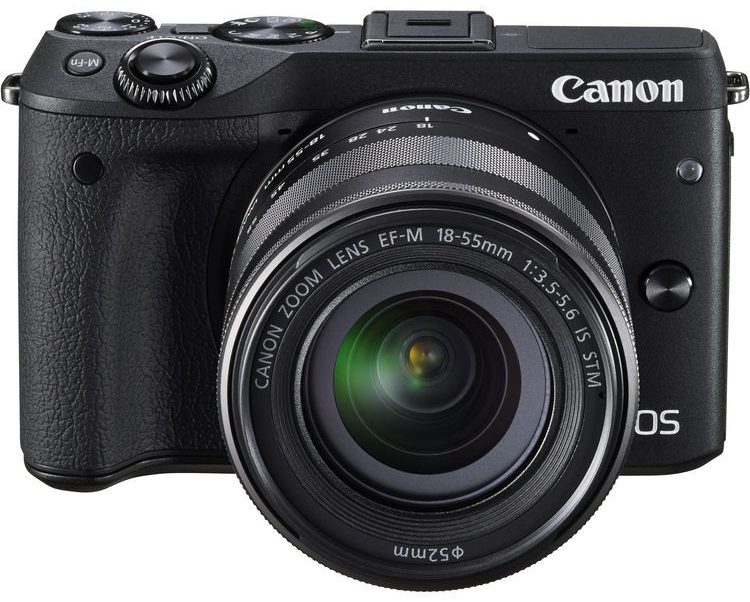
In the film days I shot a Nikon EM, 8008, 8008s, N90, N90s, F100, F4, F5, Canon Rebel, Canon EOS 1. All great cameras! When digital came of age, I shot with a Nikon D100, D200, D300, D300s, D70, D80, D90, D7000. Nikon fell behind Canon in the video department so I bought a Canon T2i in 2010 and never shot my Nikons again. I sold all my Nikon gear between 2011-2014. It took a while to get rid of everything. Since 2010 I’ve bought and shot a Canon T2i, T3i, 60D, 70D, 6D, and 5Diii. I’ve loved all these DSLRs but never enjoyed hiking or traveling with them. The weight, bulk, and expense was always a chore. It got so that I didn’t enjoy my photography as much and considered it a chore. I then bought a Canon M in 2014 and a Canon M3 in 2015. The M3 has been my favorite camera from 2015-2019. It was essentially a backup camera at first but then became my primary camera after I saw some 12×18 enlargements and a 20×30. The IQ is as good as an APS-C DSLR and as good as a Full Frame DSLR at 12×18.
If you’re just starting out and mainly shoot pix on your iPhone and want a dedicated camera, I recommend a Canon M50.
Do DSLRs have any advantage? Comparing to the Canon M line, the EF DSLRs have a much larger lens selection. Generally bigger buffers, faster AF and FPS.
Another reason to shoot mirrorless, or specifically the Canon M series is the cost. Do you want to be walking around in a country you’ve never been to and don’t speak the language where what’s in your camera bag is equal to the average workers annual salary? I don’t. An M system can be had for $1350 and can all fit in a small camera bag. M50 w/15-45 $650, 11-22 $350, 55-200 $350 = $1350 buys you an amazing system with a lens to cover any focal length. Add in the 28mm macro and you’re all set.
Canon M isn’t for everyone
Wedding photographers – The Canon M series is not an ideal camera for everyone. If at some point in the near future you plan to shoot a wedding and get paid for it, I would recommend a DSLR. The size impresses people who don’t know anything about cameras.
Videographers – who want to shoot and get paid, who want full sensor 4K or need all the rigs, cine lenses etc will be better off with a Canon DSLR or EOS R, RP, Panasonic GH5, or Canon Cinema camera.
Sports and action photographers – Long telephotos, 10FPS, lots of AF points, are better off with a Canon 7Dii, 80D, or Nikon D500.
Art – enlarging to over 24×36 would probably be better with a full frame camera of 24mp or more.
Conclusion:
If you are currently shooting with an iPhone, I recommend getting an M50 system first, then if you want to enlarge your images to 24×36 or larger and are critical about image quality, a full frame Canon 6D Mark II, 5D Mark IV, Nikon 800, 810, or 850 or mirrorless Canon EOS R, RP, or Nikon Z6, or Z7 would be a good addition. Do you need to stay with Canon? Not really. The lenses are not compatible though you can use an EF lens on an M body with and adaptor but there are so few instances where you would prefer to do this. The speed lights are 100% compatible, remotes might be compatible, and possibly the battery and charger if you get an RP but other than that you don’t gain much by sticking with Canon FF if you own an M system.
 Canon M Cameras