Should I buy a zoom or prime lens? For the vast majority of users, I recommend zoom lenses. Zooms have a range say from 70-200, 11-22, 18-55 etc. Primes have a single focal length and it is fixed. Zooms allow you to reframe a shot without moving. They save weight since the equivalent prime lenses would weigh much more and you would have to change lenses more often.
You miss 100% of the shots you don’t take – JR Smith.
I heard JR Smith of the NY Knicks say this when being interviewed after a playoff game. Like basketball, this is also true in photography. I realized packing in 20-40 pounds of gear on a hike was really not much fun. In King’s Canyon I ran out of water on a hike, but I had all my prime lenses! I was young and thought I needed prime lenses for sharp images. I would ditch my camera and gear altogether since I got tired of carrying everything. Yes, missing 100% of those shots since I didn’t even have my camera. I then bought zoom lenses since overall they were lighter than a bunch of primes. I also didn’t have to waste time changing lenses. I bought a Canon Rebel since it was lighter than my 8008, N90, F4, and F100. The same lesson applies to the digital age. No outdoor photographer likes to carry around a 10-30 lb backpack full of gear. No photographer traveling by plane wants to carry a whole suitcase full of gear.
How can you lighten your load? Zoom lenses.
So instead of carrying a 20, 24, 35, 50, 85 I just got a 20-35 zoom and a 70-200
omg, what about when you need a 36-69mm focal length to get your shot? Simple, either back up or move closer to get your shot. Sounds too simple but try it out in the field and let me know if you actually can’t live without a lens that covers 36-69. The only prime lens available is a 50mm anyways which though commonly supplied as a kit lens in the dinosaur days of film, isn’t very useful unlike the kit zooms being offered today.
So advantages are weight, not having to change the lens which saves time and eliminates an opportunity for dust to get into your lens and camera body. Crop while shooting. Instead of cropping in post production, crop in production will yield better image quality and is how you should shoot anyways. The “not having to change lenses in the field” is a huge advantage for outdoor photographers.”
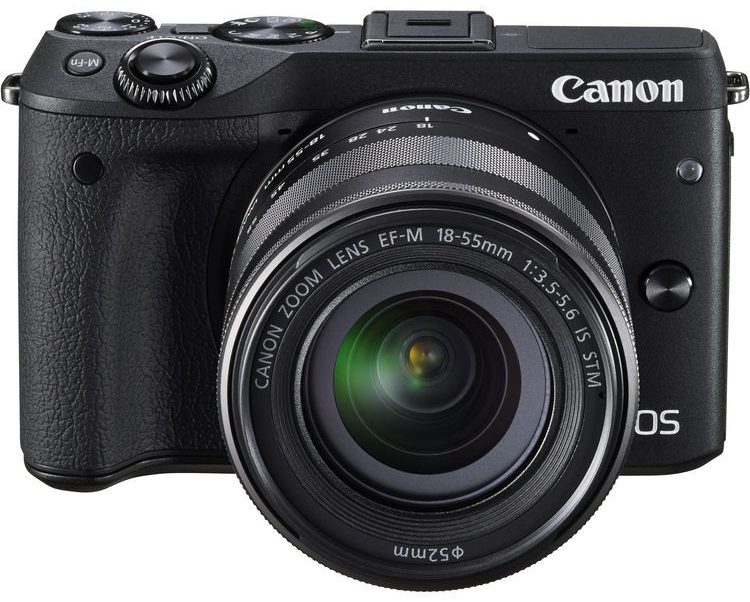
For the Canon M series, the 11-22, 18-55, and 55-200 are all you’ll need. If you want to get into macro close up than the 28mm is a great lens.
There are primes available for the EF-M mount from Samyang and Rokinon. The problem is that they are all manual focus. They are fast though, really fast. I’m hoping Canon will follow their lead and produce a group of fast primes like a FF 20, 24, 35, 85, 105 and then some fast zooms.
 Canon M Cameras