Charging at home
Do I need a charger at home?
Yes. Having a charger at home is really a necessity unless you drive to work and your worksite has a charger. Even then, you may have to wait to charge at your worksite, something at home you won’t have to worry about. Note that your Tesla comes with a portable charger. Many people just use this charger at home.
What charger to buy
If you want a stand alone charger, the Tesla model is $500, but you can get non Tesla chargers for half that price. The main advantage of the Tesla charger is not having to use an adaptor.
How much is the charger?
The Tesla charger runs about $500 with other brands costing $250 to $1000. There is no downside to getting a non Tesla brand charger except you have to use an adaptor since they almost all come with a J-plug. Tesla includes a J plug adaptor with your portable charger. I bought a charger from Costco for $250 and it works fine.
Electricians or DIY?
How much is the labor to install a charger?
Where should I install my charger?
Do I need a dedicated charger, won’t my portable charger work fine?
Yes, your portable charger will work fine.
How fast will it charge?
How do I get cheap electricity?
The quickest way is to change your PG&E plan to an EV charging plan that charges you based on time of use. The cheapest time to use electricity under this plan is from 00:00 to 15:00 so all night and morning and a big chunk of the afternoon. Note this is for my city, your city may have a different schedule. The savings are significant. $0.50 to 0.30 to 0.15 per Kwh depending on what time you charge.
Supercharging
- ALWAYS check the supercharger nozzle before plugging it into your car! Sometimes they are damaged or vandalized.
- Some superchargers don’t work. One charger flat out didn’t work. Another charged at around 100 mph and when I switched to another one in the same location I got 300-400 mph. It’s not just how many cars are charging at that location either since I was the only car there. If you only get 100-200 mph, consider switching to another charger.
- There are handicapped chargers now so only park in them if all others are being used. This is a new thing, when I started out on my trip I didn’t run into any.
- You’ll hear loud dull clicking noises from your car when you start and end charging. I don’t know what these noises are but I assume they are normal.
- Different supercharger locations charge different $ rates. California seems to be the most expensive. Not sure where a price list would be.
- Some superchargers are really inconvenient. In Philly the ones downtown are all in paid lots so you have to pay for parking as well as charging. The art museum had free destination chargers but in a paid lot. The app doesn’t tell you its a paid lot but you can tell it’s a garage and if so, assume you’ll have to pay to park there.
- Free supercharging is not worth much. If you are comparing to gas it may seem like a $10,000 perk over the life of the car, but in reality most people will charge at home or work for free or almost free. Supercharging is usually for road trips. I think people consider how much they spend on gas and think if they get free supercharging it will be equivalent to what they spend on gas but this is not accurate.
- 300 miles of range is really misleading. You really have 240 miles of range. Why? You need to leave 10% in the tank at the top and bottom so you only charge to 270 and recharge before you reach 30 so you will drive about 240 miles before charging. In practice this is more than 3 hours of driving so most people will need a break after driving for 3+ hours. So most people won’t need a bigger battery than the long range Model 3.
- Don’t buy the ChaDEMO adaptor. I don’t recommend these fast charging adaptors. They cost $450!!! The adaptor is just another thing you have to carry around in the frunk. They are not small. The price to charge at these fast chargers is outrageous (insert pic of price and compare to super charger). Moreover, even driving 20,000 miles around the country I only saw 5 of these fast chargers. The Walmart in El Paso, Texas had 4 stalls, one other Walmart, and Yermo, Ca had 2 workings and 2 under construction at Eddie World. You won’t need it unless you have a super special use case where superchargers are not available but the fast CHAdeMO chargers are.
- You don’t have to “fill up”, just get enough to get to the next supercharger. Once you get to your destination, then you can fill up.
- Philly was the worst for supercharging or Charge Point charging since all of the chargers were located in paid lots that cost $2-$10/hour. Best to charge before getting into Philly and charge up at your airbnb or hotel.
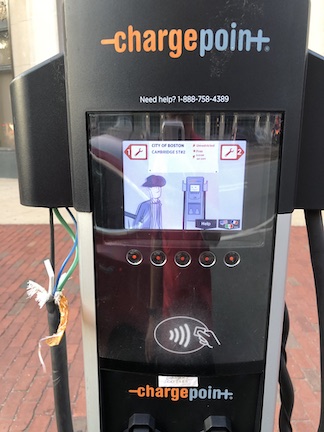
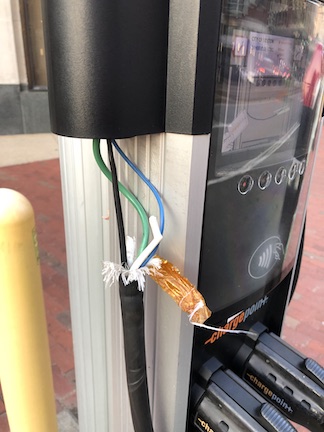
- Boston was also difficult to charge. The Chargepoint charger closest to me was on the street so you have to pay the meter $2.00/hour. I’ve never seen a charger on a public street like this. The worst is that out of 4 chargers, 3 were not functioning. Though 2 were marked as such the third one wasn’t but I figured out it wasn’t going to charge after working with tech support for 15 minutes on the phone trying to get it to work. There seems to be anti electric car sentiment here in Boston as you can see from the damage to chargers that people cause. So senseless.
- You DON’T have to buy a $500 Tesla wall charger for home. To get a NEMA 14-50 plug and the electrical panel upgraded to a 50 amp breaker, and the Tesla charger wired and installed will be a significant expense. An alternative is buying this $280 AxFAST Level 2 Portable Electric Vehicle Charger from Costco. I installed myself with two screws. I just plugged this charger into my NEMA 10-30 dryer plug in the garage and get 15 mph of charge. I converted to a gas dryer a few years ago knowing I’d want to use my dryer 30 amp plug to charge my Tesla. You’ll have to use the Jplug converter so if you plan to travel and charge at a non Tesla charger, don’t forget to take the converter with you!
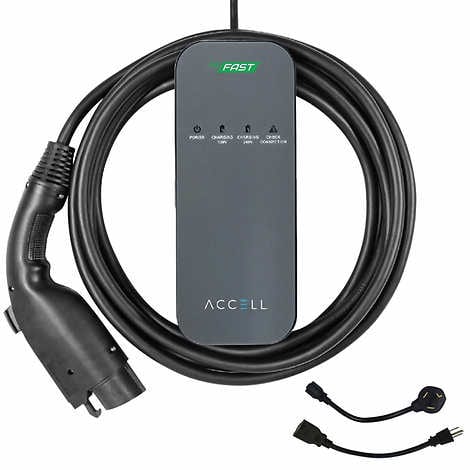
10/31/20 I had a conversation with a new owner of a Model Y who thought that he needed a Tesla wall charger, a NEMA 14-50 plug, and that 15 mph of charge wasn’t sufficient. So I think the above addresses his first two issues, but regarding the 15 mph of charge not being sufficient. I suppose if you come back home late with a 10% charge and need to drive 240 miles early the next morning and have no access to a supercharger on your route then yeah, maybe 15 mph of charge is insufficient, but when would that ever happen? In 3+ years the 15 mph of charging has always been fast enough for me.
Here’s some basic home charging info that EV owners should know:https://www.youtube.com/embed/F-2yt1PFQgQ?version=3&rel=1&showsearch=0&showinfo=1&iv_load_policy=1&fs=1&hl=en&autohide=2&wmode=transparent
EXPERIENCES
- In Sept 2018 when I was in Yellowstone charging, the app stopped working. Apparently the servers were down. Luckily I had my Tesla key card in my wallet so I could still get into my car and get it to work but other Tesla owners were not so lucky. This is the first time I have heard this happened but it’s a good idea to keep the card on your person just in case.
- You can meet other Tesla owners and have a good conversation. This happened at Jackson Wy, and Macadonia, OH but most of the time other people charging just ignore you.
- The Kettleman City, Calif supercharger has their own lounge that you need a key code to get into. It has AC, rest rooms, WiFi, comfy leather seats. The only one I ran into but since that Highway 5 is heavily traveled between SoCal and NorCal it was a great idea.
- You will be frequently asked: How far does it go on a charge? How long does it take to charge? How much does it cost to charge? How much did it cost? Is it fast? Any problems? Is it easy to find a charger? Does it use gas? I figure in a year this happened 30-40 times. After 20 you’ll get tired of it. Some people that are interested in buying a Tesla ask even more questions and think they can monopolize a total strangers time. Just say you need to use the restroom. I considered getting a card or flyer printed with all the answers to these questions and a link to my referral code. I’d recommend doing this.
- In Vernal Utah near Dinosaur National Park, I was getting something out of the frunk (front trunk) and a woman drove up to me and asked me if I needed a jump. At first I didn’t know what she was talking about.
- Activate the Sentry Mode and check your USB drive to make sure footage is getting recorded. I didn’t experience any vandalism but a woman door dinged my car in a hotel parking lot. I contacted the Police, they took a report, I had pictures before, after, and of the license plate. She denied it. If I would have had Sentry Mode on and working I could have compelled her to pay for repair, but my insurance company said it would be my word against hers and I’d have to pay for the deductible etc. (put in pix)
- One guy at Niagara Falls parking lot asked me, “Hey, when are you gonna get a muffler for that thing!?” I responded, “Yeah, I’m going to the dealer next week.” This was the one friendly interaction with a gas car owner I had the whole trip. It was much more common to experience resistance, rudeness, and hate:
TESLA HATERS
There are Tesla and EV haters out there. This hate manifests itself in vandalized charging plugs, gasoline cars parked in Tesla supercharger spaces, and verbal assaults. This happened a few times during my trip. The Buffalo, NY supercharger had one of the charging ports vandalized. I recommend inspecting the plug before putting into your car since the damage is not always obvious like this one:
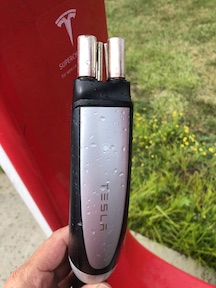
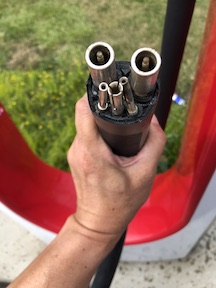
This took significant effort and tools to damage the charger to this extent. Moreover, I’d worry about getting shocked by this cable. I’m not sure where this hate comes from. It could be a class issue and unlike other expensive luxury and sports cars, Tesla’s have their own designated parking spaces and branded chargers so they are much more visible. If you hated Porsches, where would you go to vandalize them? A gas station? A Porsche dealer? Still, it is not just Tesla. In July 2019, this downtown Boston Charge Point charger had its charging cable pulled so hard it no longer functioned so it’s not just Tesla superchargers. This took a major effort and they didn’t worry about getting shocked?
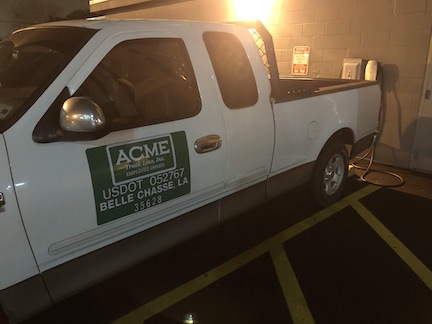
Gas cars parked in EV and Tesla destination charging spots is another manifestation of active resistance to Teslas. This was at the Holiday Inn in Metairie, LA on New Years Day 2019. I asked the staff to tow these cars to other parking spaces. There were at least 20 available spaces when this truck parked here. If there were no other spaces at least that would make some sense, but when there are plenty of available parking spaces then… The Jackson, Wyoming supercharger had several people parking in the Tesla supercharger spots. To be fair, the sign says this is allowed, but when there are open spaces closer to the front door then you have to see this as hostility directed at Tesla owners.
In Cape Cod, Mass I pulled into the (?) hotel, a $60 a night hotel, the cheapest one in town and these beer drinking guys said, “Oh, you think you’re f’ing better than us cuz you drive a Tesla?” This group was in the room below mine and directed constant verbal violence at each other so I got out of there and moved across the street to the $120/might place but got a good nights sleep.
ELECTROCUTION ANXIETY
Okay, I have never heard of this but it did cross my mind if it was pouring rain and I plugged into a supercharger could I get shocked? I charged in the rain several times. It takes a while before juice starts to flow from the charger into the car so I’m sure there are safeguards in place.
 Canon M Cameras