
10.22.21 left. 11.03.21 came back. 1962 miles 539 kWh 274 Wh/mi
10.22.21 Left on the road trip. Unfortunately I left the day before an atmospheric river blew into town. It started raining on 10.23.21 and rained off and on until I got back. Originally I planned a 1-2 month trip, just to Oregon and Washington national parks but the weather made Crater Lake obscured in clouds and fog so that was a major disappointment.
Redding, Ca
Major charging mistake. I looked at the supercharger website and saw a supercharger in Redding, Ca so I figured I could make it there with under 80 miles in the tank and be fine, but that supercharger station was still under construction so I had to drive all the way back to Red Bluff to charge, an 80 mile round trip. Major f up. Oh well, I learned my lesson to check the Supercharger map more carefully. Still, this experience underlines how difficult it will be to charge on the road for EVs that aren’t a Tesla.
Redding itself is nothing special. However, the Sundial Bridge is worth a look. The main benefit to staying in Redding is that it is 1 hour and 10 min drive to Burney Falls State Park. This is the most impressive waterfall in California. Yosemite Falls is great for height, but Burney is great for width ,number of waterfalls, and accessibility. The falls are easy to walk down to and photograph. $10 for parking, but $25 for camping if you want to stay after sunset. Don’t forget to drive past the Falls parking lot, through all the campsites until you dead end at the lake. The lake is definitely worth the 70 min drive from Redding. Photographically sunrise or sunset don’t mean much here since the Falls are protected from the sunlight.
Oregon:
After Burney Falls, the next must see hike is Silver Falls State Park. Visit on the way north since the road from the 5 is much straighter and direct than coming from the South.
The main grocery store is Fred Meyers. More than just groceries it is like a small Walmart. Tesla superchargers are often located in the Fred Meyers parking lot.
Tip: Rather than paying $100/night, pay $1000/month and just leave early if you have to. After 10 days you’re getting a discount on every night you stay. I’d also bring a power strip with USB plugs, night lights, etc
Portland has really gone downhill. I was there in 2001, 2010, and 2013. There is now much more graffiti, homeless people, and crime. One major change, there was not much Asian food back then, mainly Thai and Chinese food but now there seems to be much, much more, especially Vietnamese food. Had some pretty good Pho at Beaverton. The main place I recommend to eat is Saburo’s Sushi. Amazing portions, quality, and price. Order online and go pick up.
Beaverton is Niketown. The Nike main office is located in Beaverton and the building is massive! The town itself as you might guess is upper middle class and a world away from Portland though only about a 20-25 min drive. I went to the company store and got 40% off with my friends and family discount. The prices were still really high but there are items you can’t get at the other Nike stores. No sales tax either. I ended up only getting 2 shirts, 2 shorts, and some compression sleeves. The guy ahead of me had two shopping cars overflowing! I’m sure he’s going to sell on eBay… The black Suburban and Escalades that pull up with their drivers waiting outside are the pro athletes that come to town to buy stuff.
Tennis is expensive. Ended up going to Babette Horenstein Tennis Center since in late Oct and Nov it rained most of the time I was there. $22/hour to rent a tennis court but you don’t have much of an alternative. If tennis is your game, note that it will cost a lot more if you live in Oregon and Washington compared to California.
This road trip was different from the 2018-2019 trip. It was only a couple weeks and taken during the Covid-19 pandemic and the Biden administration. At least I don’t have to worry about what the president is doing or saying. I figure if I’m vaccinated for the flu and Covid and got my booster, I felt pretty safe staying at Airbnbs that I have all to myself and wearing a mask in public. I guess this is the new normal. Not sure I’d want to fly and travel internationally.
My Model 3 has 31,000 miles on it and I bought new Michelin Cross Climate 2 tires before leaving. Great move since these track amazingly in the rain. I only hit 2-3 inches of snow at Crater Lake and the tires worked fine. The California and Oregon wildfires were all out and the air quality was fine.
I used a GoPro Hero 9 to take dash cam footage. I used a Sigma FP and Lumix S5 for my stills and video. A big departure from the Canon DSLRs and R that I used the last trip. Telephoto shots are still the domain of a DSLR or mirrorless camera and something camera phones can’t approach yet in the 300mm-600mm range. I’m sure they will soon though.
Even though I’m starting 3 years after the last one, the EV arena still has Tesla on top and every one else trying to catch up. I think the charging infrastructure and EV cars from other manufacturers will catch up to where Tesla is now in 2021 in another 5-10 years, but then Tesla will have their Cyber Truck, Roadster, and updates to the 3, Y, X, and S out by then too. Another issue is that charging infrastructure will still be owned by a few companies making memberships, fobs, membership cards an added inconvenience that slows down the charging session. Tesla drivers just pull up to a Supercharger and plug in. It’s smooth as silk.
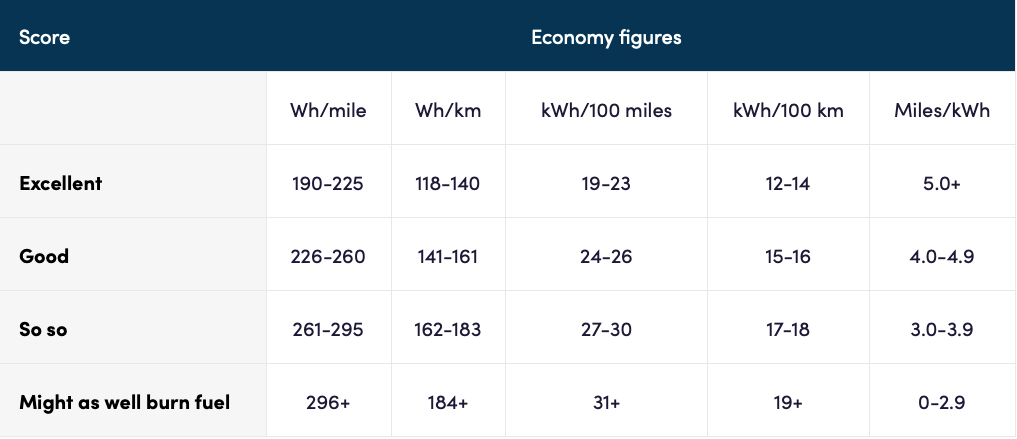
My last road trip range and charging time were the most important numbers to be concerned about. However, efficiency is important too. I didn’t pay attention to $/kWh or $/gallon and Wh/mi or MPG. Miles per gallon or MPG equivalent for an EV is Wh/mi. Like gas mileage, this is a measure of efficiency and cost per mile to operate. For miles per gallon, below 20 mpg is bad. 20-25 mpg is average. 26-30 mpg is good. 31-40 mpg is excellent. 41-51 mpg is outstanding but comes with compromises like acceleration and handling and a number only the Prius can achieve.
As more EVs flood the market, efficiency will start to get discussed. From InsideEVs is a good article: Electric Cars In US Listed From Most To Least Efficient and the Tesla Model 3 comes out on top and the Porsche Taycan on the bottom!
For my 2018-2019 road trip I went 20,401 miles used 4,585 Kwh, and got 225 Wh/mi. According to this article, Electric car efficiency explained: miles per kWh you can see the equivalent of MPG is Wh/mi. Since I got 225 Wh/mi I’m right on the edge of excellent. This should be taken into consideration when buying an EV. According to insideevs: the Porsche Taycan uses over 400 Wh per mile, the Ford Mach E uses about 337 Wh/mile, and the Tesla Model 3 uses 234 Wh/mile, so the Tesla is clearly much more efficient than these other two EVs. Maybe miles per kWh is the best measurement.
 Canon M Cameras