Most photographers might pack it in or stay in the hotel once it starts snowing. However, there are still good shots out there even when it’s snowing. Here are some of my experiences:
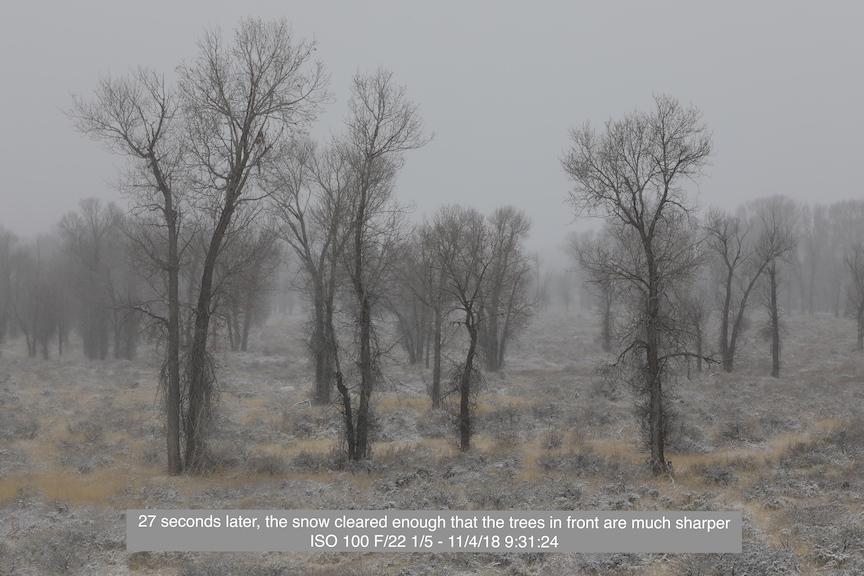
Winter 2018 – Drove out to the Tetons before sunrise, but it was snowing so no sunrise. There was 2 inches of snow on the road. Temp was about 32F. Visibility varied from 1/4 to 1/2 a mile. The Tetons were not visible at all.
Plan A: I drove out to get closer but the road was closed. (iPhone X)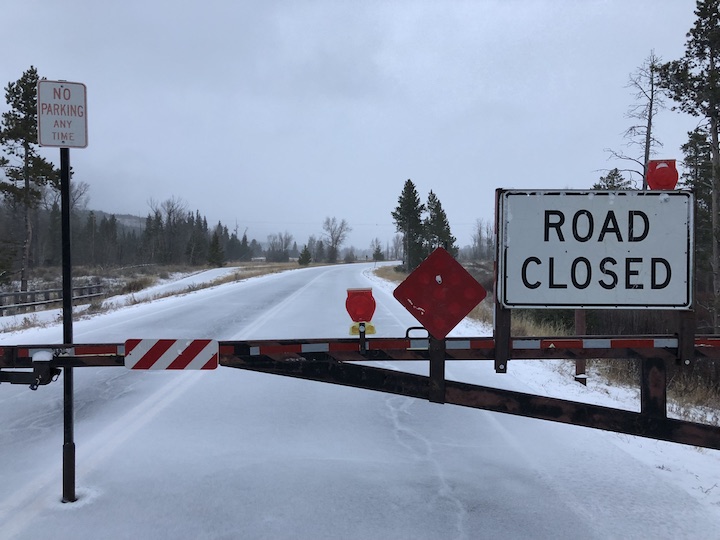 Plan B: went to Blacktail Ponds, but didn’t see much. (iPhone X)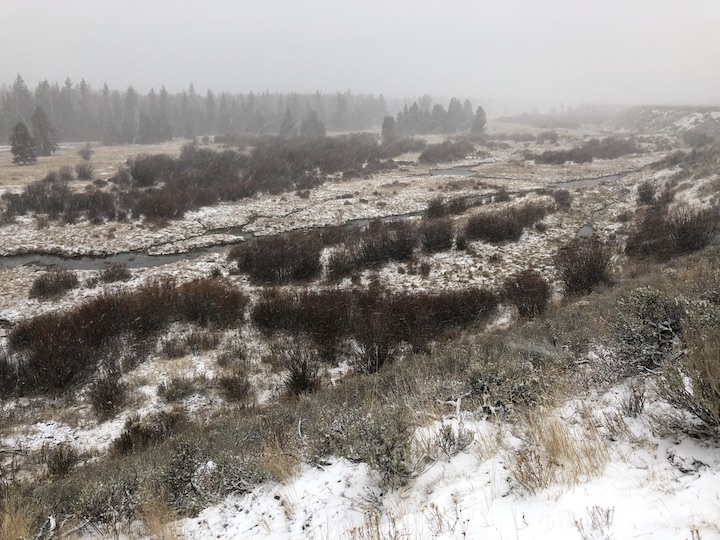
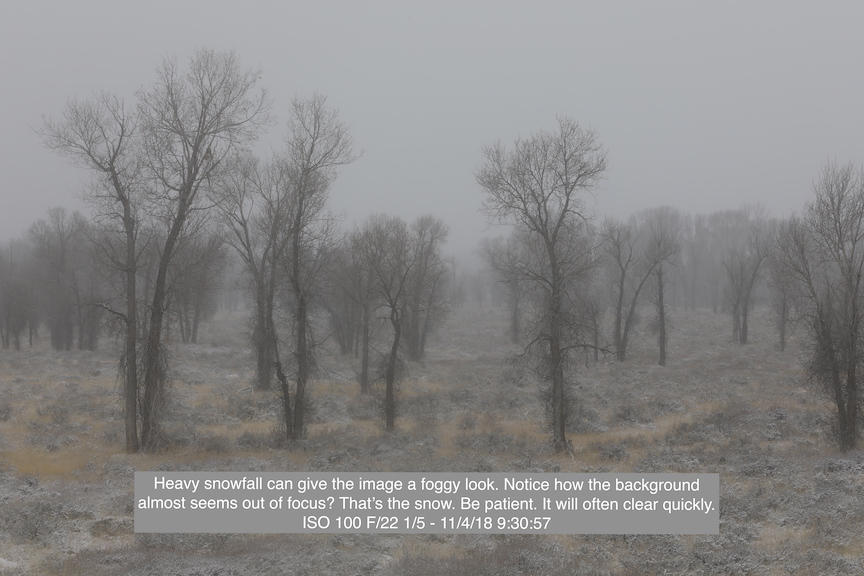
Plan C: Drive back to the hotel and look around on the way. Canon 5D Mark IV, JPEG from camera, no post.
Products I recommend for the cold. I carry extra in the car too.
- Moisturizer – Cetaphil. Put on your face and hands. Hands need it if you take your gloves on an off a lot.
- Sunscreen – Zealios. Put on the exposed areas of your face. It will help with the wind chapping
- Vaseline – Put around the lips and nose. They always seem to dry out in cold windy weather.
Clothes and accessories.
- USB battery powered hand warmers
- Feet warmers
- Northface gloves
- Fleece neck warmer
- Fleece hat and chin strap
- Insulated socks
- Insulated shoes
- Nike dri-fit combat
I tried using a doormat since I stand in one place for 1-3 hours shooting the sunrise. I reasoned that since my feet were still cold with thermal socks and insulated shoes on, that a barrier from the frozen ground would help. It didn’t seem to help much, so I bought electric toe warmers on Amazon. They help. The battery lasts 4 hours and takes about 4 hours to charge.
I was in Yosemite in Winter 2016 and it was snowing pretty hard in the the valley.
Plan A: Get a shot of the Merced River shot with El Cap in the background. The snow was a wet snow and the storm covered El Cap and everything else, so I had to compose within 400 feet or so and let the background get blurred with snow. Not the shot I was hoping for, but being flexible is a necessary skill for a nature photographer.
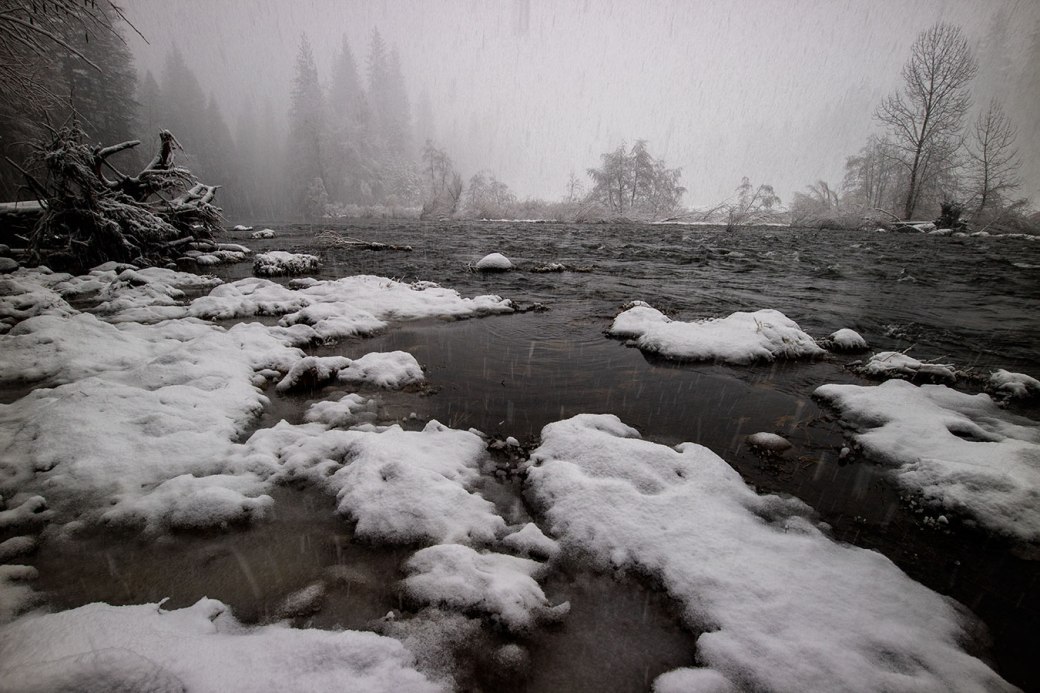
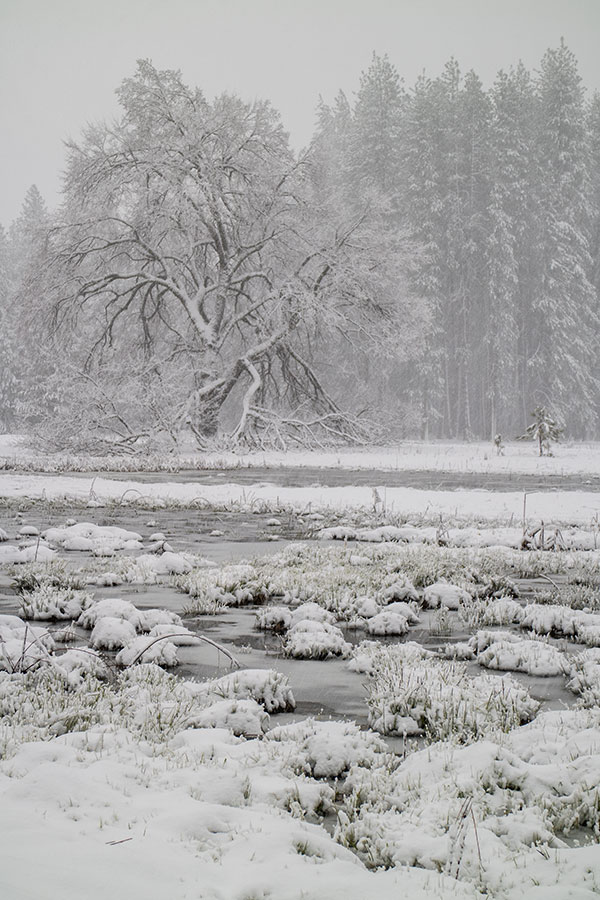
Plan B: Drive around looking for something in the valley. I saw a shot near the Ahwahnee Hotel right near the road. You can get a good shot when it’s snowing, just compose with the subject close enough so the snow doesn’t obscure it too much.
The challenges when shooting when it’s snowing:
- Disappointment: You got up early but it’s snowing and no landscapes are really visible. Solution: Be flexible. There is still stuff to shoot, but rethinking the subject is required. You’ll need to be closer to the subject since the snow will obscure the view of it. I’ve shot trees in a meadow successfully at Yosemite and the Grand Tetons.
- The snow makes it difficult to see the subject. Solution: Pick closer subjects. Use the snow as a bokeh effect to blur the background. Wait till it clears enough so you can shoot.
- The Cold. 30F/0C or colder make it uncomfortable and difficult to concentrate. Solution: Besides dressing properly and using USB battery powered hand warmers and toe warmers, sit in the car and go through a mental checklist and visualize what you are going to do. Prep in the hotel room so a tripod and one bag are all you’ll need. Even turn the camera on before getting out of the car if you can’t turn it on with gloved hands.
- The Cold will freeze your hands as soon as you take them out of their gloves. Solution: Limit the number of times you take your hands out. Use a #2 pencil eraser to push the buttons on the camera. Use a wired or wireless remote. Use hand warmers. Instead of thick ski type gloves, I tried these Northface Summit G3 Insulated Gloves so I could work my camera controls and used hand warmers and a remote in my pocket with good results down to 8F.
- Condensation builds up in your lens when you bring it inside the hotel room. Solution: Leave it in the car. Take the battery and SD card out to charge, download, and format. Ziplocking it in a plastic bag can also work.
- The Wind. Dries out and freezes the face, nose, lips, and hands. Solution: Cetaphil, Zelios sunscreen, and Vaseline
- The Wind drives snow and water right into your lens. Solution: Have dry photo cloths handy and wipe before each shot. Try to position the lens so it doesn’t face the wind. Block the wind and snow with your glove. A lens hood can also help..
Version 11/4/18 first post. 1/7/19 updated.
 Canon M Cameras