A Spoken History is a video of someone’s life story.
It starts with a good interview of either your mom, dad, grandfather, grandmother, or whoever migrated from another country to the US. If both parents or grandparents migrated, pick the one that is most enthusiastic, speaks english the best, has the best memory of events, and that you get along with the best.
You prep them with a list of questions and topics that you want them to discuss on camera.
See below for specific questions but be sure to cover:
- Year, City, State, Area, Province, Country where they were born.
- Any migration from the place of birth before coming to America
- What was life like in their home country where they were growing up and before they migrated?
- What pushed them from their home country?
- What pulled them to America and not some other country?
- Where did they settle initially and why? Many people move around before settling down
- Did they speak English? If not, how did they learn? How did that impact job opportunities?
- Was there an ethnic enclave for them to settle into?
- Did they go to elementary school, middle school, high school and college here? What was that like?
- How did they get a job?
- How did they meet your mom or dad?
- When did they have kids including you?
- When they talk about where they were born, ask them to elaborate, “this is the southern part of California where it’s warmer and smoggier than northern California. Most people work in the entertainment industry…”
Your finished video should be 5-7 minutes long. It’s okay to make it longer, but it needs to be worthwhile. Longer = longer not necessarily better. If the video is boring and you make it longer, it will just be boring us for a longer period of time. Still, there have been some projects over 20 minutes that were excellent. If in doubt, send me a rough cut and I can give you feedback.
You can upload rough cuts to youtube or vimeo but turn in the final cut with a USB drive. I’ll copy it and then give it back to you.
You don’t have to screen your video in class, just let me know in the credits, public viewing Yes or No.
Add in titles in the beginning and credits at the end. Think up a good title for your video.
In the credits please put names of all the people that worked on the project with their role:
Videographer: blah blah
Editor: blah blah
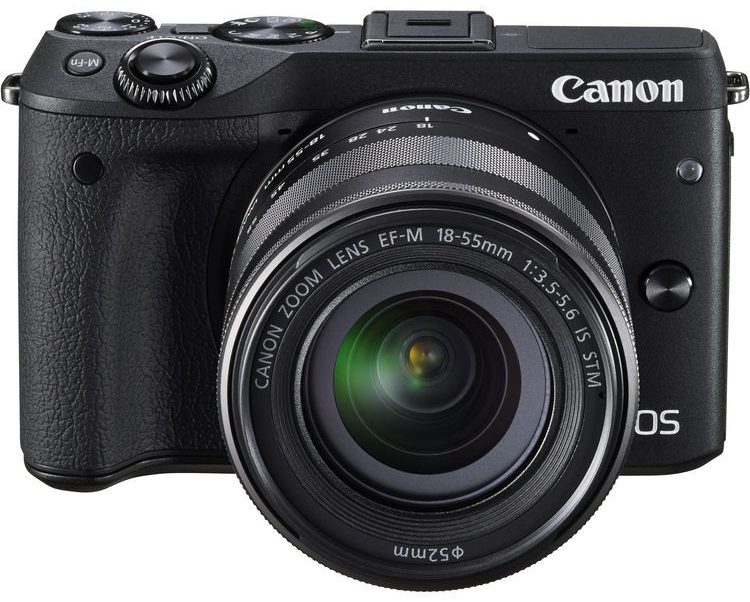
Camera: Whatever camera you used or
Phone: Whatever phone you used
Editing Software: iMovie or whatever you used
Total hours spent on project: How many hours start to finish including pre-production, production and post
Public viewing: Yes or No
Consistent problems I’ve been seeing are: Not enough, not relevant, or poorly placed B roll. No B roll video of the talent doing something other than the interview. Jump cuts can easily be fixed with B roll. B roll and subtitles not being up long enough to see or finish reading. Line wrapped subtitles. Hard to read subtitles due to the background color and font color matching. Not following directions in How to Make a Good Video.
—————
Spoken History Project detailed explanation
Spoken histories are memories of living people. This quarter you have the opportunity to do a spoken history project on yourself, your parents, or your grandparents.
Preproduction:
If you’re interested in this project, keep in mind that it will take a significant time commitment, though you will see from the examples below that it is well worth the time. In the Pre Production phase these are some of the issues that need to be addressed:
- Who will I interview?
- Are they available, local, and able to spend time with me?
- Do they have an intriguing and compelling story?
- What questions will I ask?
- Who will subtitle and or translate if necessary?
- Do I have the necessary equipment?
- Gathering of pictures and old video that you might want to integrate into your video
- Script. This is where you write out what you plan on doing and how your video will progress
- Storyboard – a storyboard is a graphical and linear presentation of what your video will look like. It can be simple hand drawn stick figures to much more elaborate graphic type novels.
In this phase, it’s important to have a, “Plan B.” I you had planned to interview your dad, but he had to travel for work, you have to figure something else out.
Production
This is where the actual filming of your interviewee takes place. Make sure to shoot a lot of B roll and not just the interview. The scanning of pictures. The recording of B roll and any audio used.
Postproduction
In this phase, editing will be the main task. Importing of pictures and converting any old videos and importing them into your editor.
FAQ:
Q: Do I need to translate/subtitle/dub if the dialog is not in English?
A: Yes, you will need to subtitle dialog that is not in English. I don’t recommend dubbing over in English since it is important to hear the voice of the person speaking. The viewers might understand the language too so English subtitles are the best technique. iMovie makes it pretty easy to add in subtitles.
Q: Do I have to edit the video myself?
A: Yes, but other students have learned how to use iMovie or Movie Maker for this project. There is a wealth of online support for iMovie including http://www.apple.com/support/imovie/ and videos on vimeo and youtube
As you can see they are very diverse in the stories they tell, the production quality, and the approach of the filmmakers. Lengths range from 5-16 minutes but can be longer.
Background Information
Three types of spoken histories
- Biographical
- Community history
- Specific topic or historical moment
Biographical
Alex Haley and The Autobiography of Malcolm X is a great example. The subject could be famous person or not. The focus could be on a specific family member.
Community History
Instead of focusing on an individual, this would focus on a group of people, a community. Unbound Feet is an example of a community history. “A social history of Chinese women in San Francisco, from the turn of the century through the end of World War II. Using spoken history interviews, unpublished autobiographies, government census reports, and English- and Chinese-language newspapers, Yung illuminates the larger canvas of social change with the stories of specific women from the first and second generations and their quests to improve their lives.”
Event, Historical Moment, or Topic
People who participated in an event or experience like the opening of the Golden Gate Bridge or the aftermath of the 9/11. The collective memory will build a fuller and more diverse picture of what happened. Focusing on what it is like to live in East San Jose from 2000 on. The topic could span more than one generation, grandparents: what was the experience of moving from Mexico to America and settling in East San Jose like? Parents: What was it like to live in East San Jose and then move out to the Cupertino? Siblings: What was it like to grow up and live in the Cupertino?
- A spoken history is subjective, biased, based on memory, sanitized
- Not a snapshot of the past, but an interpretation of it
- Shouldn’t be used as the sole source since it’s just one version of the truth
- Spoken histories give the subaltern a voice
- Qualitative way of recording history
- Humanizes a family tree
- A form of empowerment
- Allows the younger generation to understand the older generation and improve relations
How to do a spoken history
Prep your talent with all the questions and just have them talk about their life while addressing all of your questions. If they don’t answer everything, don’t worry about it. The point is to get them to speak naturally and conversationally. Have them speak from their perspective so say, “my mother” instead of “your grandmother”
1. Be prepared, don’t wing it
2. Mention the consent form, but don’t have them sign it yet. Only required for strangers. If they are a family member don’t worry about it.
3. What is your goal? From the goal you generate a list of questions to match the goal
4. Prepare a list of questions, but don’t show them ahead of time unless they ask for them
5. Read up on your racial/ethnic groups American history
6. Fit the person into a larger community
7. Might have to convince them to do the interview, be honest, say something like “this will benefit future generations, your children, your grandchildren” etc
8. Offer to use pseudonyms (fake names)
9. Emphasize they can withdraw from the interview at any time
10. Start with the oldest and friendliest first since they will die the soonest and they will also be more willing to be interviewed. After having a good experience being interviewed they can also convince other members of the community to be interviewed.
11. Language – bring a translator/partner with you if you need it, but don’t have them just translate. Have them act as you where they know what to ask and how to do the interview and then they just do it in their language. After it’s done, review the translation and then figure out your follow up questions. Don’t have them translate there at the interview since it will be too slow. They are not a middleman, but the interviewer.
12. Ask permission to video tape the interview
13. Be flexible, if they get off track and topic don’t worry about it too much, but gently steer them back on topic if you need to.
14. Give them time to answer
15. Silence is okay
16. Avoid leading questions, “was life cruel, oppressive, and cold on Angel Island?’ vs how was your life on Angel Island? What did you do on a day-to-day basis?
17. Ask more than just yes and no binary questions, but open-ended questions like, “tell me about…
18. Reword words like racist and discrimination to, “were you treated differently than white people? How?” This is one of the most important points. If you ask an old woman were you oppressed due to your gender, she may immediately say no since she’s lived with sexism and traditional gender roles her whole life. Ask, “were you treated differently than your brothers?”
19. Be alert and engaged
20. Ask follow up questions
21. Their version may be wrong, but don’t change the transcript. You can prompt them, with are you sure… since the immigration station had burned down by 1942…, but if they stick to it, don’t push it.
22. Watch out for skeletons in their closet
23. Length should be 1.5-2.0 hours or shorter if they get tired. Resist the urge to finish everything in one meeting especially with older people. Meeting them 2-3 times across 1-3 weeks will give them time to think about your questions and reflect on them.
24. Bring them something food, drinks etc if you are going to their house
If you are writing a paper because your talent didn’t want to be recorded, or if you are having technical issues then write an intro, conclusion with analysis, and the body is the actual interview text. Edit for conciseness but be sure the important points are covered. Upload to turnitin.
Topics and Specific Questions
Note that you don’t have to get all these questions answered, subtract and add questions as you feel it is appropriate to do so.
Initial questions
- What is your full name?
- When and where were you born?
- Describe the neighborhood and house that you lived in.
- What was the house (apartment, farm, etc.) like? How many rooms? Bathrooms? Did it have electricity? Indoor plumbing? Telephones?
- Where did you go to school?
- What was school like for you as a child? What were your best and worst subjects? Where did you attend grade school? High school? College?
- Where did you work?
- What did you do in a typical day ?
- What was your favorite thing to do for fun (movies, beach, etc.)?
- Describe a typical family dinner. Did you all eat together as a family? Who did the cooking? What were your favorite foods?
Interviewees parents and family
- What are your parent’s names?
- Where were they born?
- When?
- Who was the oldest relative you remember as a child? What do you remember about them?
- What do you know about your family surname?
- What stories have come down to you about your parents? Grandparents? More distant ancestors?
- How were holidays (birthdays, Christmas, etc.) celebrated in your family? Did your family have special traditions?
Social Historical context
- Do you remember any fads from your youth? Popular hairstyles? Clothes?
- Who were your childhood heroes?
- What were your favorite songs and music?
- What was your religion growing up? What church, if any, did you attend?
- What world events had the most impact on you while you were growing up? Did any of them personally affect your family?
- How is the world today different from what it was like when you were a child?
Migration/Immigration/Refuge
- Who – Who migrated and who was left behind?
- Why – Why did the family migrate?
- What – What was going on in the native country and America at the time of migration?
- Did that have an influence on the decision to migrate?
- When – What year did you migrate?
- How – Did the family migrate by plane, boat, or ?
- Was it a long process involving trips and stays in several countries, states, cities before coming to America and the South Bay?
Life in the US
- Why – Why do we live here in the South Bay?
- Compare life in the native country to America, how are things different?
- Worse or better?
- Citizenship – Are you a US citizen, or permanent resident (green card?)
- What was the path to citizenship like?
- If you could have had any other profession what would it have been? Why wasn’t it your first choice?
- Of all the things you learned from your parents, which do you feel was the most valuable?
- What accomplishments were you the most proud of?
- What is the one thing you most want people to remember about you?
- What are your hopes and dreams for future generations of your family?
If you’re interviewee says uhhh and ummm a lot. See
http://www.forbes.com/sites/work-in-progress/2014/12/17/four-ways-to-stop-saying-um-and-other-filler-words/#3e751bf553c5
http://www.extension.harvard.edu/inside-extension/tips-public-speaking-eliminating-dreaded-um
http://www.artofmanliness.com/2012/06/14/becoming-well-spoken-how-to-minimize-your-uhs-and-ums/
Post interview
1. Show them the transcript for any corrections or misquotes
2. Have them sign a consent form now since they will know what they have said and what they are consenting to.
3. Think about what was ignored or excluded in the story and why
4. Think about the values and attitudes that were presented. Don’t judge.
Ethical Issues
1. Cross check for accuracy
2. Don’t try to prove your point
3. Above all, make sure you don’t hurt them or the community by revealing something confidential etc
Reference books to read on the topic or examples of oral histories
1. Valerie Raleigh Yow, Recording Oral History, 2005
2. Judy Yung, Unbound Voices
3. Judy Yung, A bowlful of tears’ revisited
Production issues:
- Gather photos, letters, magazines, audio or video recordings
- Transcribe the interview
- Translate the interview to English if necessary
- Subtitle where appropriate
Copyright © Ethan Lee • All Rights Reserved
Homework #2 – Spoken History Homework Assignment
Post to the spoken history Discussion Forum. Worth a maximum of 10 points. Note that things can change after you turn this assignment in, I just want to see where you are going, what the plan is so far, and who is doing what.
- Who will you be interviewing? Are they local? Do they speak english? If not, do you have a translator?
- When did your family migrate to America and under what circumstances? Precise dates or as close as you can get. How long was the journey? Immigration is a combination of push and pull. Understand why your family migrated to America. What pushed them out of their country? You’ll need to research the socio, political, and economic environment and history of the host country. War, poverty, political persecution, natural disaster, oppressive government push people to migrate. What pulled them to America? Jobs, a stable political infrastructure, a booming economy and demand for jobs, family already in place here in America, a better life?
- What was their Context of Reception in America?
- Why did they settle in a particular state, city, area?
- What was their profession in home country and profession in America?
- What sources you are using for your research, list out web page url’s, books, articles, youtube clips, dvds, etc.
- Do you have an HD camcorder and editing equipment?
- Any questions about this project?
- Read through the assignment
- View an examples of other projects on vimeo.
B roll
One of the challenges of making a good spoken history video is to not bore the audience. The interview is the majority of your video, but mix it up with B roll. B roll is critical to the success of your video. B roll includes pictures, scans of documents, passports, airline tickets, home video.
Contextualize
Your talent needs to be contextualized. When were they born? Where? What city? What was going on there at the time from birth to the time they left?
Use the map feature of iMovie
Include static maps so we can locate where the talent is talking about.
Include newspaper articles
Assignment and Information
Schedule – The weekly tasks you are supposed to complete
Homework – This is the homework
How to shoot a good video – These are instructions on how to shoot a professional interview
———-
 Canon M Cameras