Upgrading is buying a “better” camera than the one you currently own. This usually involves selling the older camera and is accompanied by the idea that this new camera is better and the user will get “better” images. This can be due to a higher mega pixel count on the sensor, a different type of sensor, a different type of camera, faster auto focus, or faster frames per second. This usually doesn’t involve brand so switching from Nikon to Canon isn’t seen as upgrading usually.
Upgrading was a common practice in the early days of digital, starting in 2002 and the Nikon 6.1MP D100. When the D200 was introduced in 2005 the megapixel count jumped to 10.2 and I immediately upgraded. In 2007 the 12.1MP D300 was another immediate upgrade. Unfortunately there was no D400 so in 2016 when the 21MP D500 was introduced I didn’t buy it since in 2010 I had bought into a Canon system.
Better – Better used to be straight forward. More megapixels = better image quality. More Autofocus points = more in focus pictures. HD Video = the ability to shoot HD video, a brand new feature back in 2010. Now, new models don’t seem all that much better than the last. The 2010 T2i was 18mp, 3.7fps, 9 AF points. The 2015 T6i was a 24mp, 5fps, 19 AF points camera. On paper, maybe enough to upgrade. The 2017 T7i is a 24mp, 6fps, 45 AF points. Would a T6i owner upgrade to a T7i? Probably not. A user can now skip two, three, even four generations before upgrading, when we used to not skip any. The buying process also become a bit more confusing. The newer rebels specs push so close to the x0D line, 60D, 70D, 80D that the line differentiation loses its clear distinction. Weight and bulk now are the main distinctions. “I want to go light so I’ll get a rebel”
Upgrading for megapixels is effectively over. Before 2013-2016 and the standardization of 24mp APS-C sensors, upgrading was just something a lot of us automatically did since we associated more megapixels with better image quality. The new cameras would also have some new features that made it seem like a good idea to buy. Now that megapixels has settled down with 20-24 MP APS-C sensors standard and 24-36MP standard on full frame sensors, more MP is no longer a reason to upgrade. Some photographers don’t buy on spec but on actual performance. My 20MP Canon 6D has the smallest megapixel count but produces stunning 24×36 prints. I expect this is one reason why DSLR sales have been declining year over year. The megapixel war is over. Upgrading for more mp is over. Proof is how well the 6D is selling, price is steady at $1300-$1500, and how long it’s been around, 5 years and counting.
Upgrading for full frame is a based on a myth. A full frame sensor will not give you inherently better images compared to an APS-C sensor. An APS-C sensor may be desirable if shooting telephoto wild life or sports shots. dpreview has an interesting article, Opinion: The myth of the upgrade path.
Upgrading to a pro or semi pro body from an entry level body. I’d guess this upgrade behavior is shrinking due to the gap between a Rebel, 80D, and 7Dii or a 6D and 5Div is shrinking. Know anyone who sold their Rebel and got an 80D or 7Dii? Know anyone who sold their 6D and bought a 5Div?
Upgrading for some new feature. I upgraded in 2010 when the Canon T2i had full HD at an entry level $800 price point. In 2011 I upgraded to the T3i for the flip out LCD screen that made video recording much easier. I haven’t seen a must have feature since 2011! No wonder DSLR sales have fallen for 5 straight years.
The technology has matured. An iPhone is so good, most will never get a DSLR. Those that do buy a DSLR will find they won’t need anything more. This maturing of technology then has had a direct impact on sales. Why upgrade? What I’ve got works just fine and I can use an old version of Photoshop like CS6 and ACR.
Mirrorless is a market that isn’t dependent on megapixels or video, but the desire to have a smaller and lighter camera and lens system to carry around. There is definitely a steady market demand for mirrorless for this reason, but it looks like that equates to about 3 million cameras sold a year for the last four years. Not a booming market that some predicted. I’d expect many are now buying mirrorless instead of DSLRs, or maybe in addition to. I did. But then I sold all my DSLRs and don’t plan to buy another one.
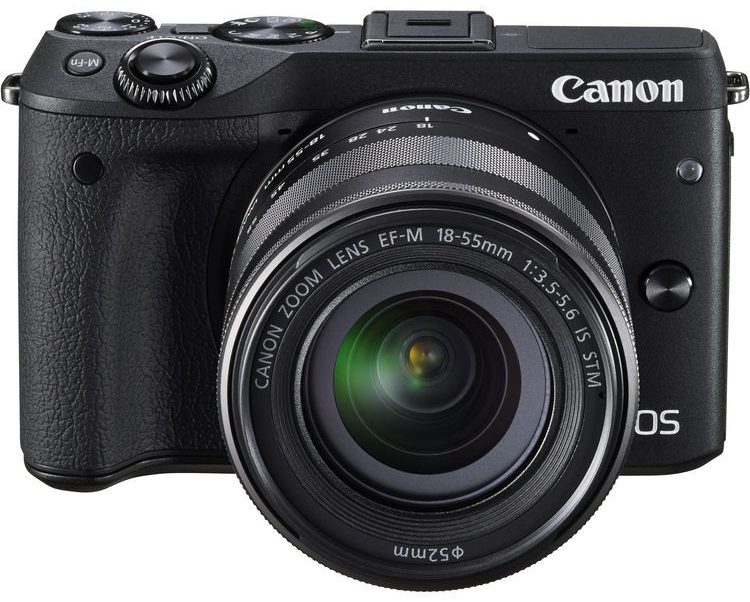
Canon M cameras: An M200, M50, M5, and M6 Mark II. The only real decision is do you want a built in viewfinder? If so, get the M5. Need a viewfinder and 4K? Get the M50. If not, get the M6 Mark II.
Conclusion: Upgrading has definitely slowed down since 2013. Before upgrading, be honest with yourself before you spend any money. Will a 7Dii get you better images or improve your photography compared to a T7i? If you are using an older model, two generations or older than the current model then the upgrade decision is easier the older the camera body. Upgrading from a T1i or T2i to the T7i is a no brainer. Note there are costs beyond $ to upgrading. If you upgrade from the T7i line to the 80D line to the 7Dii line, each camera is significantly larger and heavier, not just more expensive. Unless you need or want super fast AF and FPS, just get the M6 Mark II.
 Canon M Cameras